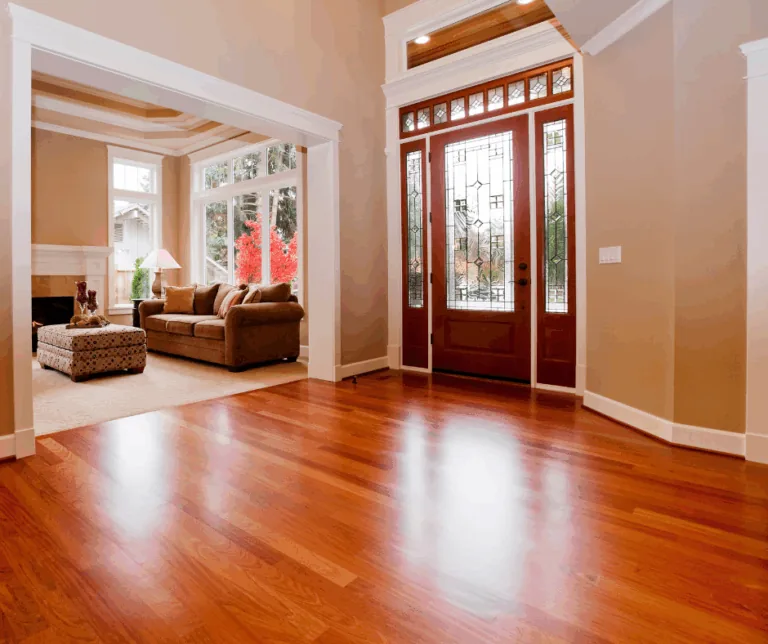
It's one of the most common questions in our showroom: can you even have real hardwood floors in Las Vegas? The short answer is yes - homeowners across Summerlin, Anthem, and Green Valley have beautiful wood floors that have held up for years. The longer answer is that our single-digit humidity and slab foundations mean hardwood needs to be selected and installed differently here than it would be in a humid climate like the Midwest or Southeast.
Why Dry Air Changes the Wood Flooring Conversation
Hardwood is a natural material, and it never fully stops responding to the moisture in the air around it. In a humid climate, the risk is usually cupping or buckling as wood absorbs moisture. In Las Vegas, the risk runs the other direction: boards can shrink slightly and open small gaps between planks during our driest months, typically late spring through early fall when indoor humidity can dip below 20 percent with the AC running constantly.
Wood species matters here too, not just construction. Domestic species like white oak and hickory tend to handle our humidity swings a bit more predictably than some tighter-grained exotic species, simply because they've been tested across a wider range of North American climates for longer. That's not a hard rule against exotic species - we've installed plenty successfully - but it's one more reason to talk through species choice with someone who's installed wood floors specifically in this valley, not just wood floors in general.
Engineered vs. Solid: Which Handles Our Climate Better
Engineered hardwood flooring is constructed from several layers of wood veneer cross-laminated together, which makes it dimensionally far more stable than a single solid plank. That stability is exactly what a desert climate rewards, and it's why the large majority of the wood floors we install in the valley are engineered rather than solid. Engineered wood also installs directly over a concrete slab with a proper vapor barrier, without the additional subfloor work solid hardwood typically requires.
Solid hardwood is not off the table - some homeowners specifically want a floor they can sand and refinish generations down the road, and that's a fair reason to choose it. If you go this route, we recommend keeping solid wood to interior rooms that get climate-controlled, consistent conditions, away from slab-adjacent moisture and unshaded west-facing glass.
Subfloor Prep Over a Vegas Slab
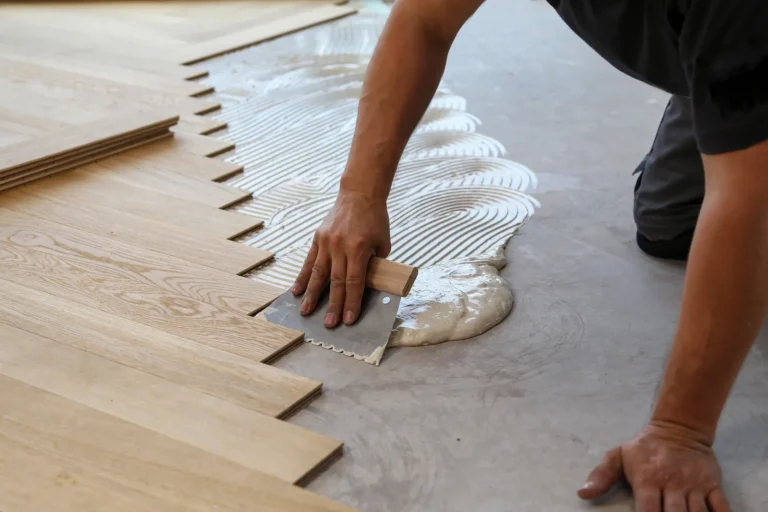
Beyond acclimation, the moisture barrier between a wood floor and the concrete slab underneath matters just as much here as it does in more humid regions - just for a different reason. A proper vapor barrier keeps whatever residual moisture is still curing out of a newer slab, or seasonal ground moisture, from reaching the underside of the wood, while the wood itself dries out from exposure to our indoor air above. Skipping this step because 'it's so dry here anyway' is a common shortcut that leads to callbacks a year or two down the road.
Acclimation Is the Step You Cannot Skip
Every reputable wood flooring manufacturer requires an acclimation period, but it matters more here than almost anywhere else in the country. Boards need to sit inside your climate-controlled home, out of their packaging, for the manufacturer's recommended window before installation, so the wood equalizes to your home's actual humidity rather than whatever conditions it was shipped and stored in. Skipping or shortening this step is the single most common cause of gapping we're called out to look at.
Living With Wood Floors in a Dry Climate
- Run a whole-home or portable humidifier during our driest months to keep indoor humidity in the 30-50% range.
- Use rugs and furniture pads, but avoid placing heavy furniture right against exterior walls where temperature swings are greatest.
- Keep direct, unfiltered sun off wood floors with blinds or UV window film to prevent uneven fading.
- Expect small, normal seasonal gaps between planks in the driest months - they typically close back up as humidity returns.
Comparing Your Options
If the idea of managing humidity for a wood floor feels like more upkeep than you want, luxury vinyl plank gives you a very similar wide-plank wood look with none of the acclimation or humidity requirements. Plenty of our clients choose a blend - engineered hardwood in a formal living or dining room, LVP in the higher-traffic kitchen and family room.
For homeowners weighing the two side by side, the honest trade-off is this: real wood offers a depth, warmth, and long-term refinishing potential that no synthetic product fully replicates, while LVP offers worry-free performance with essentially none of the climate management. Neither answer is wrong - it comes down to how much you value real wood specifically versus a wood look with less upkeep, and that's a conversation worth having in person with actual samples in hand rather than deciding from photos alone.
Wondering if your floor plan is a good fit for wood?
Get a free in-home consultationGet It Installed Right the First Time
The difference between a hardwood floor that lasts decades in Las Vegas and one that gaps and cups within a year almost always comes down to installation - the vapor barrier, the acclimation, the underlayment. Our team installs wood flooring across the valley every week and knows exactly how to prep for our slab foundations and dry air. Read what past clients have to say on our reviews page, then reach out for a free estimate.